

Morning Routine Ideas: Build a Calmer, Better Day in 30 Minutes
The first hour of the day sets the tone for everything after it. A rushed, phone-first morning usually becomes a rushed, scattered day. A calm, deliberate morning — even a short one — tends to produce a calmer, more focused day.
These morning routine ideas are built for real life: no 5 am wake-up required, no expensive equipment, no two-hour ritual. Just a simple 30-minute routine you can actually keep, plus variations for early risers, night owls, parents and busy weekdays.
The short answer: The best morning routine ideas are simple and short: get light and water first, move your body for five minutes, then plan your top three tasks for the day. A calm 30-minute routine — wake, water, light, stretch, a short plan, and a proper breakfast — works better than an ambitious two-hour ritual you abandon by Thursday. Build it one habit at a time, keep your phone away for the first 30 minutes, and adjust the routine to your life instead of copying someone else's.
Table of Contents
Why mornings matter more than willpower
Mornings matter because of a simple fact: your attention and self-control are at their freshest when you wake up. Psychologists call this the “fresh start” effect — the morning is a natural reset point, and what you do first tends to shape what follows. A morning spent reacting — to news, messages and other people’s demands — leaves little attention for your own priorities. A morning spent choosing — even for ten minutes — puts you in charge of the day.
That does not mean you need a perfect morning. It means the first 30 minutes deserve a plan, just like any other important part of your day. The routine below is designed to be realistic: it fits into half an hour, it costs nothing, and it works whether you wake at 5:30 or 8:30.
The 30-minute calm morning routine

This is the core routine. Six steps, thirty minutes, in order:
Minutes 0–2: Light and water. Open the curtains or step outside for a minute of daylight, and drink a large glass of water. Morning light tells your brain to stop making melatonin (the sleep hormone) and start waking up — it is the single most effective wake-up signal there is. The water rehydrates you after a night without fluids. Do these two things before anything else, including your phone.
Minutes 2–7: Move your body (5 minutes). Gentle stretching, a few yoga poses, or a short walk around the house. Five minutes is enough: it raises your heart rate slightly, loosens stiff muscles, and wakes up your body far more reliably than a second coffee. If you enjoy exercise, this is also the moment to do a short workout — but the routine works even with five minutes of stretching.

Minutes 7–12: Wash and dress. A quick wash, brush your teeth, get dressed. Doing this early — rather than drifting around in nightclothes — signals to your brain that the day has started. Lay out clothes the night before if mornings are rushed; it removes one decision from the busiest part of the day.
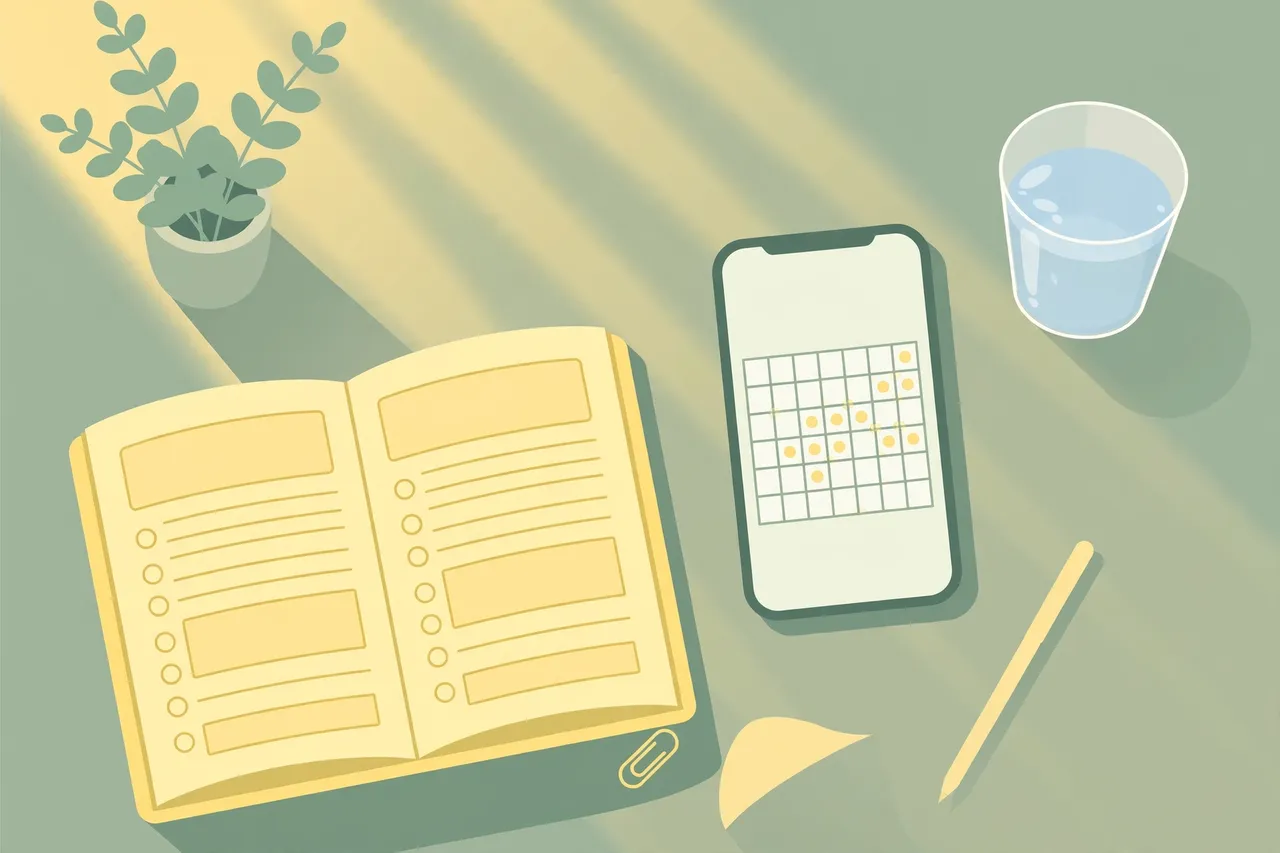
Minutes 12–17: Write three lines. In a notebook or on a scrap of paper, write: one thing you are grateful for, one thing you want to get done today, and one sentence about how you want the day to feel. Three lines take five minutes and do two useful jobs: they focus your attention, and they give you a small sense of control before the day’s demands arrive. The UK’s National Health Service includes similar short reflective practices in its five steps to mental wellbeing.
Minutes 17–22: Plan your top 3 (3 minutes). Look at your day and pick the three most important things — not ten, three. Write them down in order. This is the most productive habit in the whole routine: people who plan their top three tasks before the day starts are far less likely to spend the morning on low-value work. Everything else on your list is a bonus.
Minutes 22–30: Breakfast and a calm start. Eat something real — not just coffee. Oats, eggs, yoghurt with fruit, or toast with peanut butter all take a few minutes and keep you full until lunch. Eat sitting down, not standing at the counter scrolling. Then, and only then, check your phone.
Morning routine ideas for different lives
For early risers (wake before 6 am): you have time for a longer version. Add a 20-minute walk or workout, a proper cooked breakfast, and 10 minutes of reading. The danger for early risers is filling the extra time with work — keep at least 30 minutes for yourself before opening email.
For night owls (wake after 8 am): keep the routine short and front-loaded. Light, water, movement and the top-3 plan matter most; skip the journaling if time is tight. A night owl’s best routine is a short one done consistently, not a long one abandoned after two days.
For parents: build the routine around the children’s schedule, not against it. Do your light, water and top-3 plan before the children wake — even 15 minutes of quiet time changes the morning. Involve children in the simple parts: stretching together, or choosing breakfast the night before.
What to avoid in the morning
Checking your phone first. This is the single most common morning mistake. The first thing you see sets your emotional state for the day — and a news alert or a work message is rarely a calm start. Keep your phone in another room, or on silent, for the first 30 minutes. Your messages will still be there at 8:30.
Skipping breakfast. It is tempting when you are rushed, but it usually backfires: low energy by 10 am, cravings by 11, and poor concentration until lunch. If you genuinely cannot eat early, take something with you — a banana, a small pot of yoghurt, a handful of nuts.
Overloading the routine. The most common reason morning routines fail is ambition: ten habits, a 5 am alarm, meditation, journaling, exercise, cold showers — all at once. Start with three habits only (light, water, top-3 plan), do them for two weeks, then add one more. A routine you actually do beats a perfect routine you quit.
Hitting snooze repeatedly. Snoozing fragments your sleep and leaves you groggier than getting up the first time. Put your alarm across the room so you have to stand up to turn it off, and go to bed 15 minutes earlier instead. Good mornings start the night before: the Sleep Foundation recommends a consistent sleep and wake time as the foundation of healthy sleep.
Building the habit (so it actually sticks)
Habits stick when they are easy, obvious and rewarding. Make yours easy by shrinking it: a 30-minute routine is easier to keep than a 60-minute one. Make it obvious by linking it to something you already do — your routine starts the moment your feet touch the floor. Make it rewarding by noticing the difference: after a week, compare a routine morning with a rushed one, and the calmer day will sell the habit to you.
Track it simply: a tick on a calendar for each day you complete the routine. Do not break the chain for more than one day — missing one day is normal, missing two is the start of quitting. And be kind to yourself on bad days: a two-minute version (water, light, top-3 plan) still counts. The goal is a better average morning, not a perfect streak.
For more simple routines that make daily life easier, see our guide to easy dinner recipes for one — a calm evening routine starts with knowing what is for dinner. And if mornings are your most productive time, our guide on how to grow followers on Instagram organically shows how the same “plan first, then act” habit works for content too.
Frequently asked questions
Conclusion
A good morning routine is not a performance — it is a gift to your future self. Thirty minutes: light, water, a little movement, three written lines, three chosen tasks, and a real breakfast. No 5 am alarm, no expensive gear, no perfection required. Start tomorrow with just the first three steps, and let the routine grow from there. Your mornings set your days — and your days, added up, are your life.
Sources: NHS — Why lack of sleep is bad for your health — https://www.nhs.uk/live-well/sleep-and-tiredness/why-lack-of-sleep-is-bad-for-your-health/; Sleep Foundation — https://www.sleepfoundation.org/
What is a good morning routine?
A good morning routine is short, realistic and done consistently: light and water first, five minutes of movement, a quick plan of your top three tasks, and a proper breakfast. Thirty minutes is enough — the best routine is the one you actually keep.
What time should I wake up for a morning routine?
Whatever time lets you have 30 calm minutes before your day starts. There is no magic hour — 5 am helps nobody who goes to bed at midnight. Pick a wake time you can keep seven days a week, and build the routine around it.
Should I check my phone in the morning?
Not for the first 30 minutes. Checking messages and news first thing puts you in reactive mode and sets a stressed tone for the day. Check your phone after breakfast, once your own priorities are set.
How long does it take to build a morning routine habit?
Most people find a simple routine feels automatic after 2–4 weeks of daily practice. Start with just three habits (light, water, top-3 plan) for the first two weeks, then add one more. Missing one day is normal — just restart the next morning.
What should I eat for breakfast in a morning routine?
Something with protein and fibre that keeps you full: oats with fruit, eggs on toast, yoghurt with nuts, or a smoothie. Avoid a breakfast that is only sugar and coffee — it gives a quick lift followed by a crash before mid-morning.
Can a morning routine help with productivity?
Yes. Planning your top three tasks before the day starts is one of the most reliable productivity habits: it focuses your attention on what matters before other people’s demands arrive. Combined with morning light and movement, it sets up a calmer, more focused day.