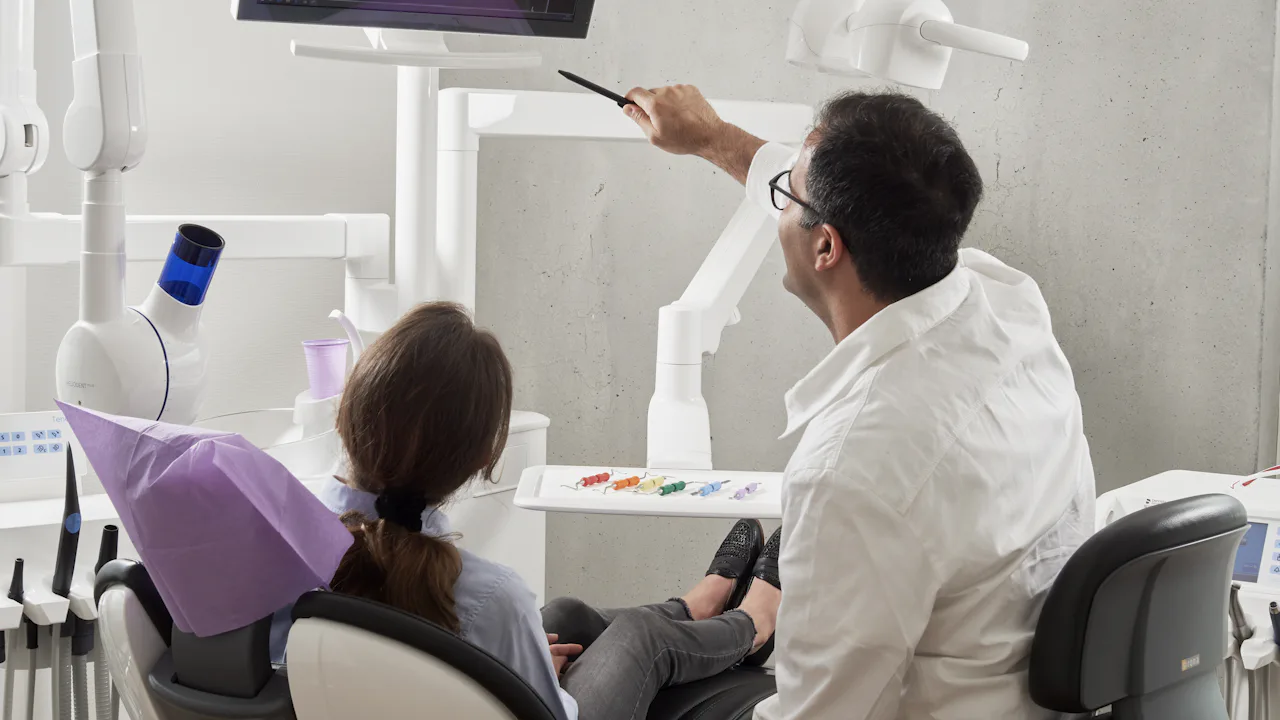
Why do we have wisdom teeth if they cause so much trouble? These four back teeth, also called third molars, usually appear between the ages of 17 and 25, often long after the rest of your adult teeth have settled in. For many people they arrive quietly and never cause a problem. For others they become impacted, painful, or infected, and a dentist recommends removing them. The reason lies in our evolutionary past, and in how much our diet and our jaws have changed since then.
The short answer: We have wisdom teeth because our ancestors needed extra molars to grind tough, coarse food, and their larger jaws had room for them. Modern diets of softer, processed food mean our jaws grow smaller, so the same teeth often have no room to come through properly. Some people now have fewer wisdom teeth, or none at all, because of genetic variation. Dentists remove wisdom teeth only when they cause problems, and leave healthy ones alone.
What Are Wisdom Teeth?
Wisdom teeth are the third set of molars, one at the back of each corner of the mouth, making four in total. They are the last teeth to develop, and they usually erupt between the ages of 17 and 25, which is why they are linked to the age when a person was traditionally thought to gain wisdom. They are larger and flatter than the teeth in front of them, with broad chewing surfaces designed for grinding.
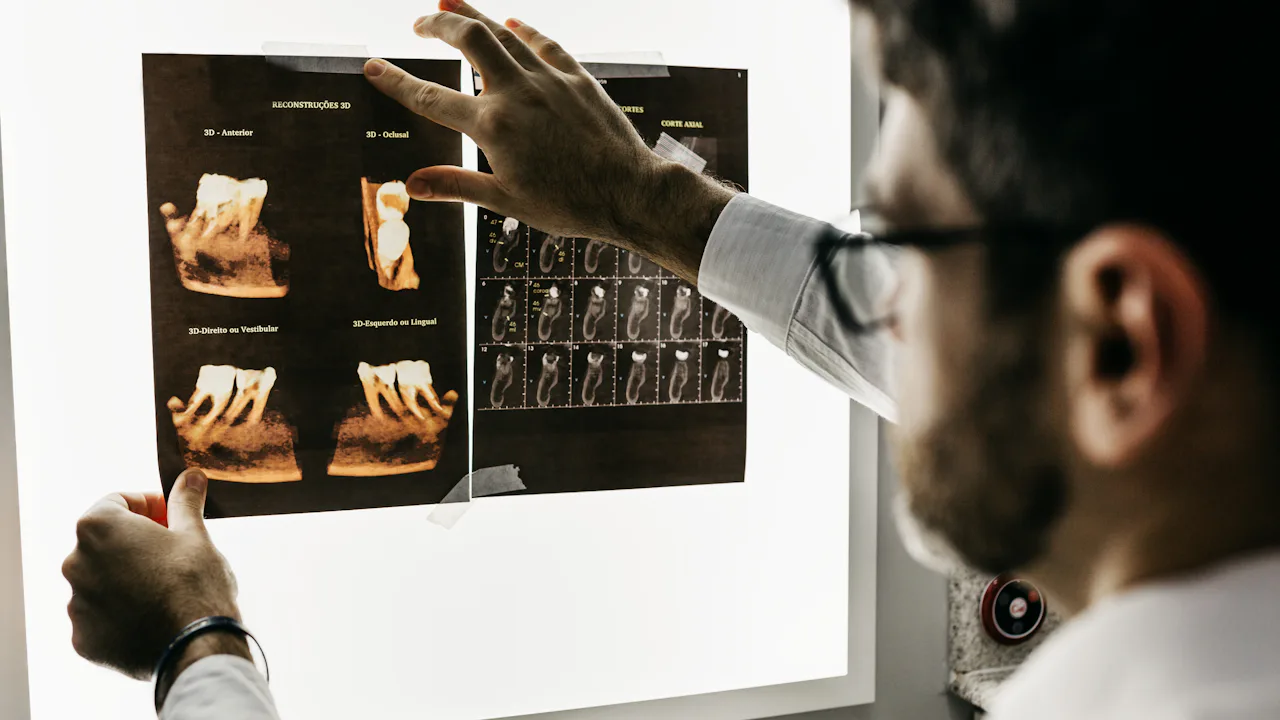
Not everyone gets all four. Some people have three, two, one, or none, and some have wisdom teeth that never erupt and stay hidden in the jaw. A dentist can see them on an X-ray long before they appear, which is how problems are often spotted early. Whether they cause trouble depends mostly on how much room there is for them, not on how healthy the rest of your teeth are.
The Evolutionary Explanation
Our early human ancestors ate a very different diet from ours. Their food was raw, tough, and gritty: roots, leaves, seeds, nuts, and raw meat, often with sand and grit mixed in from grinding stones and open fires. Chewing that kind of food wore teeth down quickly, and teeth sometimes broke or fell out. Extra molars at the back were useful spares, and a large, strong jaw gave them room to fit.
Over thousands of years, the human brain grew larger while the face and jaw became smaller, and cooking and food processing made our diet much softer. Teeth no longer wore down as fast, and the third molars became less necessary. Evolution is slow, though, and it has not yet removed a set of teeth that most people no longer need. Wisdom teeth are a leftover from an earlier version of the human mouth, much like the appendix is a leftover in the gut.
Why Modern Jaws Are Smaller
Jaw size is shaped by both genes and use. Chewing tough food in childhood stimulates the jawbone to grow, and children who eat harder foods tend to develop broader jaws. Modern children eat softer food, often cut into small pieces, and they chew less overall. Their jaws still grow, but they may not reach the size their grandparents’ jaws reached, while the number and size of their teeth have stayed roughly the same.
The result is a mismatch: the same number of teeth trying to fit into a smaller jaw. The teeth at the front usually get their space first, because they develop earlier, and the wisdom teeth arrive last, when the space is already taken. That is why they so often come through at an angle, only partly erupt, or stay stuck under the gum. For more about this site, see our About Us page.
Why Wisdom Teeth Often Cause Problems Now
When a wisdom tooth does not have enough room, it becomes impacted, which means it cannot fully break through the gum. A partly erupted tooth creates a flap of gum where food and bacteria collect, and that can lead to a painful infection of the gum around the tooth, known as pericoronitis. An impacted tooth can also press against the tooth in front of it, causing decay in a place that is hard to clean, or form a cyst around the tooth.
People sometimes blame wisdom teeth for crowding their front teeth, but the evidence for that is mixed. Front teeth often shift in the late teens and twenties anyway, as the jaw continues to grow slowly. Pain, swelling, repeated infections, and damage to the neighbouring tooth are the reasons dentists take wisdom teeth seriously, not crowding alone. If a wisdom tooth comes through straight, is easy to clean, and causes no pain, it is usually fine to keep.
Why Some People Have None or Fewer
Whether you grow wisdom teeth at all is largely genetic. Some people are born without one or more third molars, a condition called agenesis, and in some populations this is very common. Studies have found that a large share of people in some East Asian and Indigenous American populations never develop wisdom teeth, while the trait is less common in people of European or African ancestry. It is a normal variation, not a sign of a problem.
Scientists think this variation is part of the same slow evolutionary change: as jaws became smaller, the genes that control tooth development began to change too. People with fewer wisdom teeth simply have less crowding to worry about, and they are unlikely to need surgery for them. If you have never had wisdom teeth and your dentist has never mentioned them, you are probably one of the lucky ones.
When Dentists Recommend Removal, and When They Leave Them
Dentists recommend removing wisdom teeth when they are causing repeated pain, infection, or damage, or when an X-ray shows they are likely to cause problems soon. The NHS guide to wisdom tooth removal explains that removal is usually advised for impacted teeth that cause pain or infection, or for teeth that are damaging the tooth next to them. The operation is normally done under local anaesthetic, and most people recover within a week or two, with some swelling and discomfort in the first few days.
Dentists leave wisdom teeth alone when they have come through cleanly, are easy to brush and floss, and cause no pain. A healthy wisdom tooth works like any other molar, and removing it would be an unnecessary operation. In that case the dentist will simply check the tooth at regular visits and watch for changes. The Mayo Clinic’s guide to wisdom teeth lists the symptoms that mean a wisdom tooth needs attention, such as pain, swelling, jaw stiffness, and bad breath that does not go away.
If your dentist suggests removal, ask what the specific problem is, what would happen if you waited, and how long recovery usually takes. For many people the answer is to remove one or two problem teeth and keep the healthy ones. There is no rule that says all four must come out, and there is no rush if a tooth is not causing symptoms.
Frequently Asked Questions
Does everyone get wisdom teeth?
No. Most people develop four wisdom teeth, but some people have three, two, one, or none at all, and some have wisdom teeth that never erupt. Whether you grow them is largely genetic, and it varies between populations. A dentist can tell from an X-ray how many you have, even if they have not come through yet.
At what age do wisdom teeth come in?
Wisdom teeth usually come in between the ages of 17 and 25, though they can appear earlier or later. They are the last adult teeth to develop, which is why they are linked to the age of gaining wisdom. If they have not appeared by your mid-twenties, they may be impacted or absent, and an X-ray can show which it is.
Do wisdom teeth always need removing?
No. Wisdom teeth only need removing when they cause pain, repeated infections, damage to neighbouring teeth, or other problems, or when an X-ray shows they are likely to. Healthy wisdom teeth that have come through straight and are easy to clean can stay for life. Your dentist will check them at regular visits and recommend removal only if there is a clear reason.
Why are they called wisdom teeth?
They are called wisdom teeth because they usually appear between the ages of 17 and 25, an age once thought to be when a person gains wisdom. The name is a translation of an older term for the late-arriving molars. Other languages use similar names, including the French dents de sagesse, which also means teeth of wisdom.
Wisdom teeth are a reminder that the human body carries its history with it. We still grow teeth for a diet our ancestors ate thousands of years ago, in jaws that have since become smaller. For some people they are no trouble at all; for others they need a dentist’s attention. Either way, the answer is not to worry about them in advance, but to know the signs that matter and to ask your dentist if you are unsure. For more simple science explainers, browse the Everyday Explainers category.