
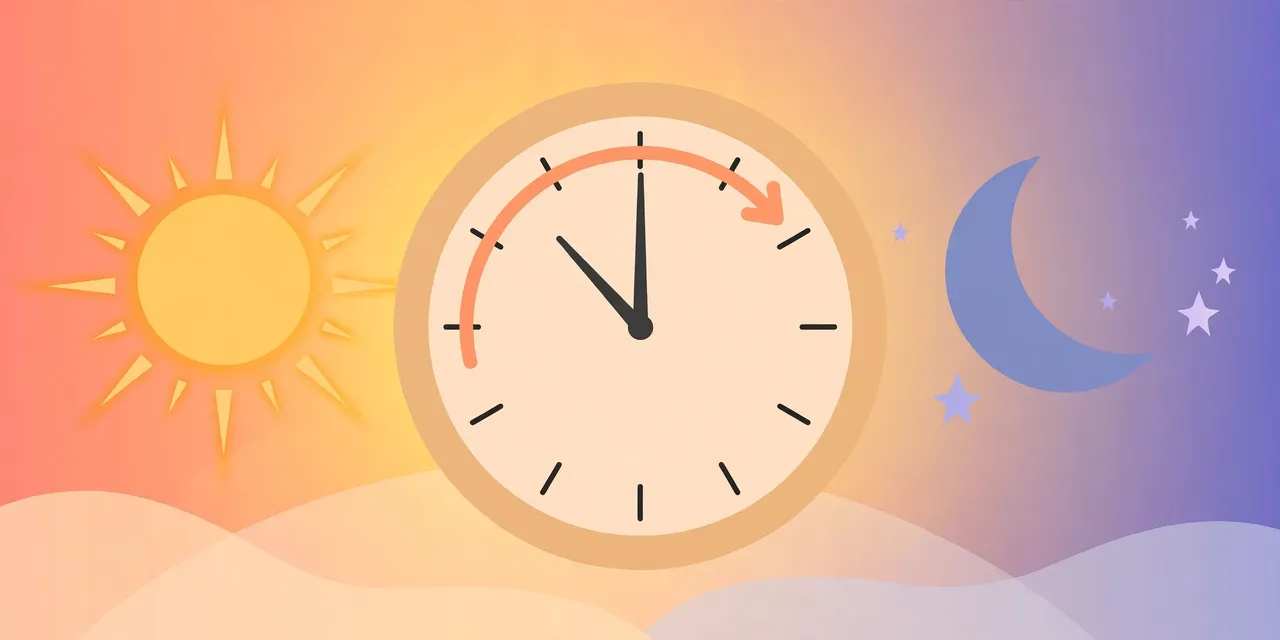
Why Do We Have Daylight Savings Time? The History and the Debate
Twice a year, millions of people lose an hour of sleep, arrive confused at Monday meetings, and ask the same question: why do we have daylight savings time at all? The clocks go forward in spring, back in autumn, and nobody seems quite sure anymore whether it helps.
The answer starts more than a century ago, with a very practical idea: shift one hour of daylight from the early morning — when most people are asleep — to the evening, when they are awake and active. Whether that idea still makes sense today is a much bigger argument.
The short answer: We have daylight savings time because governments wanted to make better use of daylight. By moving the clocks forward one hour in spring, an hour of daylight shifts from the early morning to the evening, so people have more light after work for shopping, sport and outdoor life. It was first used widely during the First World War to save energy, and it spread from there. Today many countries still use it, but the energy savings are small and disputed, and several places have voted to stop — so the debate about keeping it is very much alive.
Table of Contents
How daylight savings time works
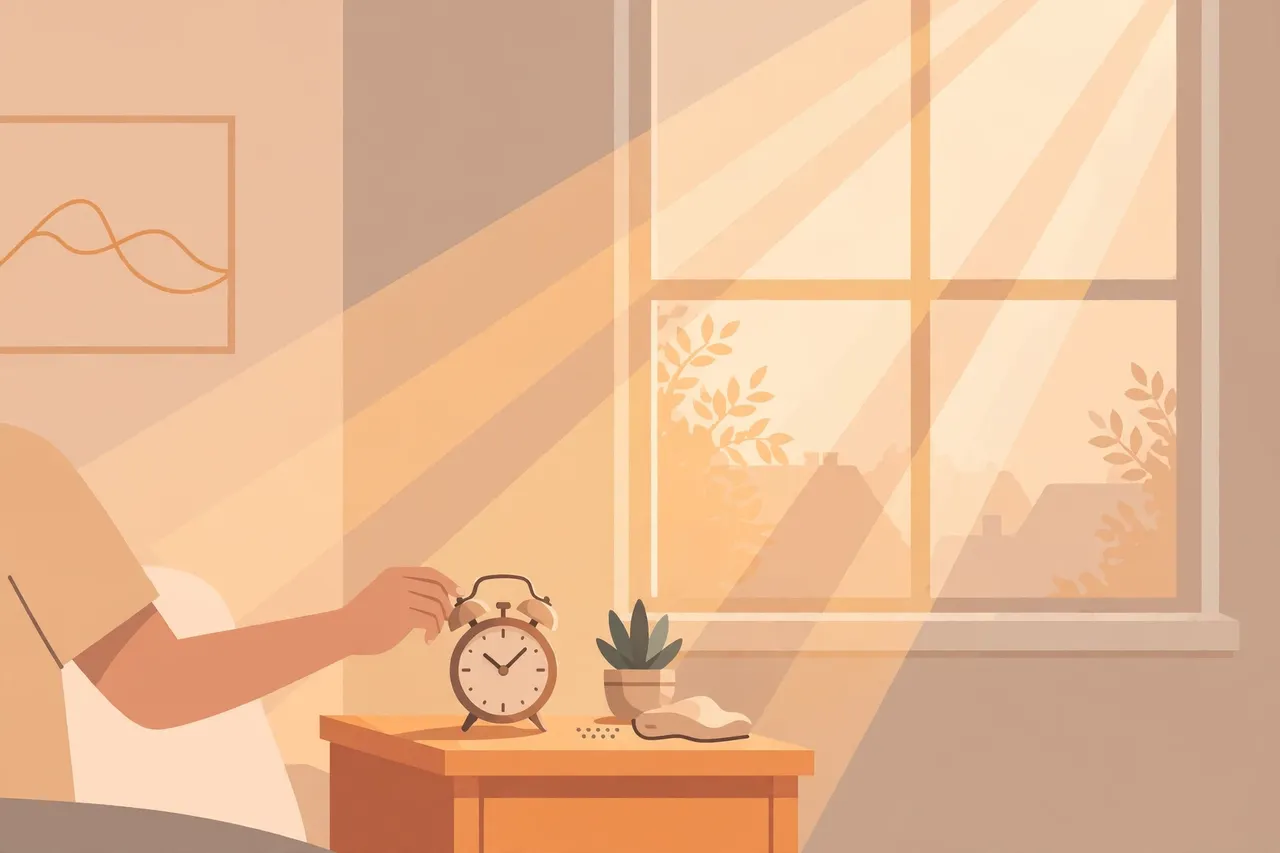
Daylight savings time (also written “daylight saving time” — the correct form has no “s” on “saving”, though almost everyone says “savings”) is simple: in spring, clocks move forward one hour, so 1 am becomes 2 am and the day effectively starts an hour earlier. In autumn, clocks move back one hour, returning to standard time.
The total amount of daylight does not change. The Earth still turns at the same speed and the sun still rises and sets when it does. All that changes is what the clock says. In summer, under daylight savings time, the sun sets at 8 pm on the clock instead of 7 pm — so the evening feels longer, even though the day itself is exactly the same length.
In the United States and Canada, clocks go forward on the second Sunday in March and back on the first Sunday in November. In the UK and the European Union, clocks go forward on the last Sunday in March and back on the last Sunday in October. The dates differ, which means for a few weeks each year, the time difference between London and New York is four hours instead of the usual five.
Why was daylight savings time invented?

The idea is older than most people think. In 1784, Benjamin Franklin — then the American ambassador in Paris — wrote a light-hearted letter suggesting that Parisians could save candles by waking up earlier in summer. He was joking, but the seed was planted.
The serious proposal came in 1907 from William Willett, a British builder who noticed that Londoners slept through the best summer mornings. He campaigned for the clocks to move forward in summer so people could enjoy the daylight. Britain rejected the idea at first — but the First World War changed everything. In 1916, Germany adopted daylight savings time to save coal for the war effort, and Britain followed within weeks. The United States adopted it in 1918, also as a wartime energy measure.
The logic was straightforward: if people are awake during daylight hours, they burn fewer candles, less gas and less coal for lighting in the evening. In a world lit by flames, that saving was real and measurable. After the war, most countries dropped it — then brought it back during the Second World War, and again during the 1970s oil crisis, when saving energy suddenly mattered a great deal.
Beyond energy, supporters had a second argument: longer evenings are good for life. More daylight after work means more time for sport, shopping, gardening and socialising — and businesses liked that, because people who are out in the evening spend money. Farmers, contrary to popular belief, were often against it: cows and crops do not follow clocks, and an earlier start meant working in the dark.
Does daylight savings time actually save energy?
This is where the story gets complicated. Modern studies suggest the energy savings are tiny — and sometimes they do not exist at all. Lighting is now a small share of total energy use, and the extra hour of evening daylight often means more air conditioning use in summer, which can cancel out the lighting savings entirely.
A well-known study of the US state of Indiana, where some counties used daylight savings time and others did not, found that the policy actually increased energy use slightly, largely because of air conditioning. Other studies have found small savings of around 0.5% of electricity use — real, but hardly dramatic. The honest answer is that daylight savings time was designed for a world lit by candles and gas lamps, and that world no longer exists.
Who uses daylight savings time today?
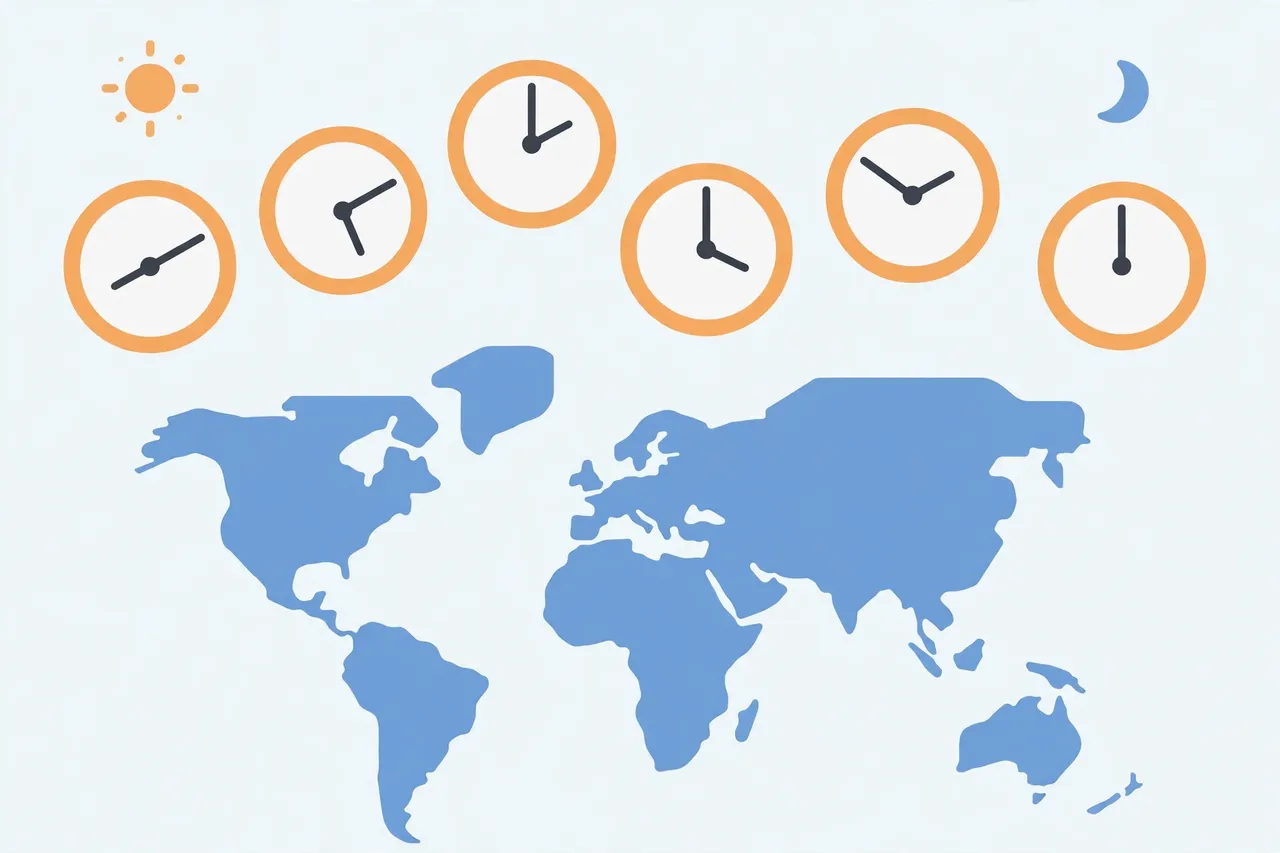
About 70 countries use daylight savings time, but the picture is patchy. The United States, Canada, the UK, the European Union, Australia and New Zealand all change their clocks — but large parts of the world do not. China, Japan, India, Russia and most of Africa and South America keep the same time all year.
There are good reasons for that. Countries near the equator see almost no change in daylight between summer and winter, so shifting the clocks achieves nothing. Russia abandoned the practice in 2014 and now stays on permanent summer time. The European Union voted in 2019 to end seasonal clock changes, but the plan stalled and member states have not agreed on whether to stay permanently on summer or winter time.
Even inside countries that use it, there are exceptions. In the United States, Arizona (except the Navajo Nation) and Hawaii do not observe daylight savings time. In Australia, Queensland, Western Australia and the Northern Territory stay on standard time all year, while the southern states change their clocks.
The case for keeping it
Supporters of daylight savings time make three main arguments. First, longer evenings: people value an extra hour of daylight after work, for exercise, family time and outdoor activities — and studies have linked evening daylight to more physical activity. Second, road safety: more daylight in the evening rush hour is associated with fewer accidents, because the busiest roads are busiest in the late afternoon, not at dawn. Third, the economy: shops, restaurants and tourism businesses report more evening spending when the sun sets later.
The case against it
Critics focus on the costs of switching. The spring change costs everyone an hour of sleep, and researchers have found a small but real rise in heart attacks, strokes and road accidents in the days after the clocks go forward. The effect fades within a week, but it is a real health cost for a policy whose benefits are uncertain.
The autumn change is gentler — an extra hour of sleep — but the darker evenings that follow are linked to lower mood and less outdoor activity. Parents and teachers also note that children walk to school in the dark during the first weeks after the clocks go back. And twice a year, the change itself causes confusion: missed meetings, wrong alarms, and scheduling headaches for airlines, hospitals and anyone working across time zones.
That is why several US states and the European Union have debated ending the practice — though they cannot agree on which time to keep permanently. Permanent summer time would mean dark winter mornings; permanent winter time would mean giving up light summer evenings. The disagreement over the alternative is the main reason the clock changes continue.
Frequently asked questions
Conclusion
We have daylight savings time because a century ago, moving an hour of daylight into the evening saved real energy and gave people light when they could actually use it. The energy argument has weakened — modern lighting and air conditioning changed the maths — but the love of long summer evenings has not. The clocks will probably keep changing until governments can agree on which time to keep for good. Until then, the best advice is the simplest: set your alarms the night before, enjoy the extra hour when it comes, and give yourself a few days to adjust when it goes. For another “why” question with a surprising answer, read our guide to why we have wisdom teeth, and browse more explainers in our Everyday Explainers category.
Sources: GOV.UK — When do the clocks change? — https://www.gov.uk/when-do-the-clocks-change; timeanddate.com — Daylight Saving Time — https://www.timeanddate.com/time/dst/
Why do we have daylight savings time?
It was introduced to shift an hour of daylight from the early morning to the evening, so people could use daylight after work instead of sleeping through it. It began as a wartime energy-saving measure in 1916 and spread because longer evenings were popular for shopping, sport and outdoor life.
Who invented daylight savings time?
The modern idea is usually credited to British builder William Willett, who proposed it in 1907. Benjamin Franklin had joked about a similar idea in 1784. Germany was the first country to adopt it nationally, in 1916 during the First World War, and Britain followed weeks later.
Does daylight savings time save energy?
Modern studies suggest the savings are very small — around 0.5% of electricity at most — and some studies find no savings at all, because extra air conditioning use can cancel out the lighting savings. The policy was designed for a world lit by candles and gas, not for modern energy use.
Why do the clocks change on different dates in different countries?
Each country sets its own dates. The US changes clocks in March and November; the UK and EU change them on the last Sundays of March and October. That is why the time difference between London and New York is four hours for a few weeks each year instead of the usual five.
Which countries do not use daylight savings time?
Most countries near the equator do not use it, because their daylight barely changes across the year. China, Japan, India, Russia and most of Africa and South America keep one time all year. Inside the US, Arizona and Hawaii do not observe it.
Is daylight savings time going to end?
Possibly, but not soon everywhere. The European Union voted in 2019 to end seasonal changes but has not agreed on a replacement. Several US states have passed laws to stay on daylight savings time permanently, pending federal approval. Until that agreement exists, the clock changes continue.